

Understanding Coronary Artery Disease
Why a CCTA + Heartflow Analysis?

Non-Invasive
Heartflow Analysis is a technology that uses images from your heart scan, so no invasive tests or anesthesia are needed.
Accurate
Heartflow Analysis has demonstrated superior accuracy in diagnosing CAD⁷’⁸ and is clinically proven to align with results from more invasive tests.⁹
Personalized
Heartflow builds a personalized, 3D model of your arteries, using images already taken during your heart scan.
Comprehensive
Heartflow Analysis can go beyond calcium scoring by identifying higher risk plaques that are most likely to cause a cardiac event.⁵
Guides Treatment Decisions
Heartflow Analysis identifies how much and what type of plaque is present in your arteries and measures any blockages that could be limiting blood flow to your heart, providing information to help guide your personalized treatment plan.⁶’⁷
How It Works
1. Scan: Your doctor will order a non-invasive Coronary CTA (CCTA) scan of your heart to look for disease.
2. Measure: Using your scan, the images undergo advanced AI processing to generate a personalized, 3D model of your arteries. Your report will measure blood flow and plaque buildup in your coronary arteries.
3. Act: Your doctor receives a personalized, color-coded 3D model of your coronary arteries and detailed insights about your heart. With all the information in hand, you and your provider can make an informed choice on the best treatment pathway for you.⁵’⁶

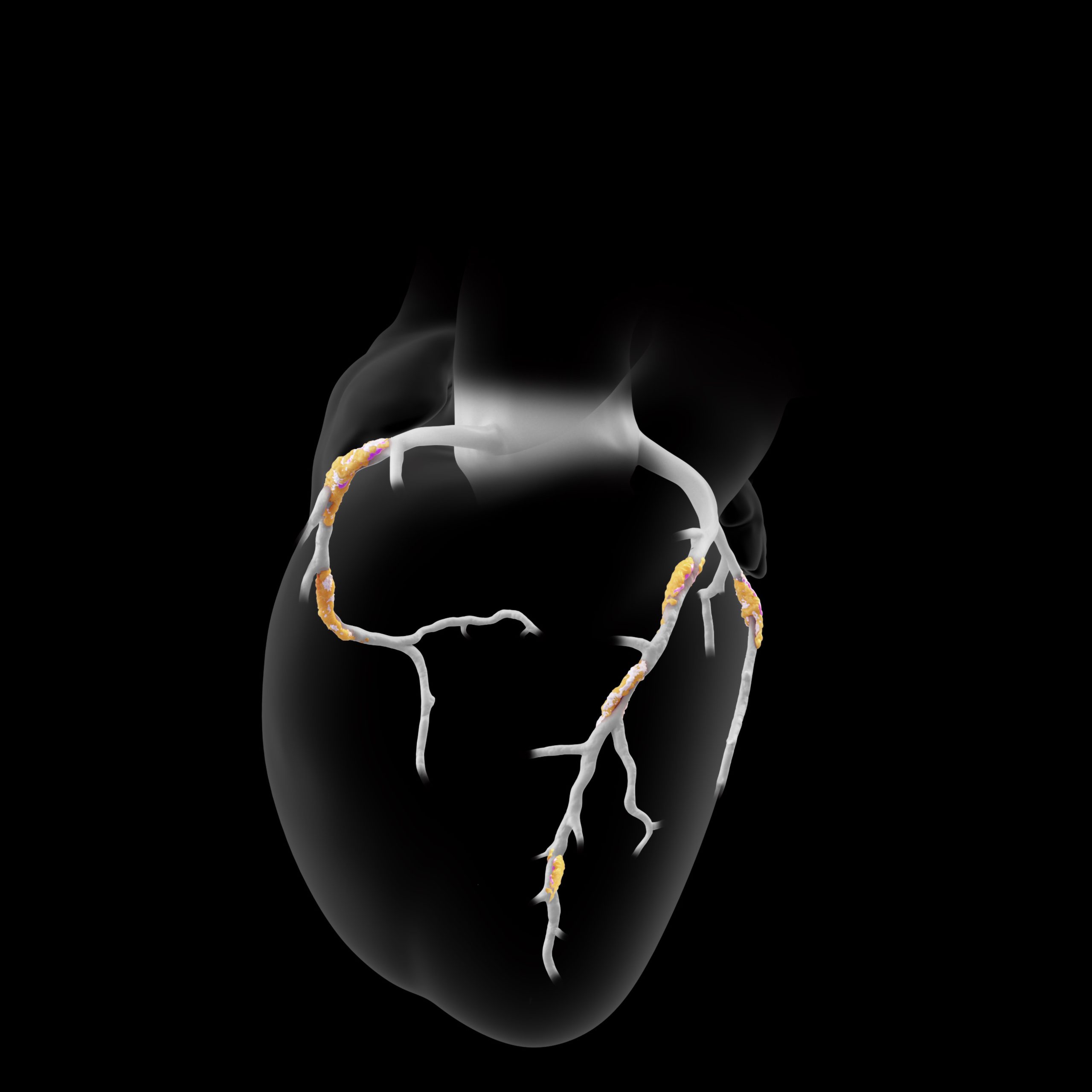
Advanced Plaque Analysis with Heartflow
Plaque Analysis is an advanced, non-invasive technology that uses your existing coronary CT scan (CCTA) to give a deeper look at the buildup inside your arteries—the root cause of most heart disease. Instead of just identifying blockages, Plaque Analysis helps your doctor understand:
- How much plaque is present
- Where it’s located
- What type of plaque it is
- Your overall risk of a future cardiac event
This allows for earlier detection and more personalized treatment—often before symptoms become severe. When combined with HeartFlow FFR-CT:
- You see both anatomy (plaque) and function (blood flow)
- Your doctor gets a complete picture of your heart health
- Treatment becomes more precise and proactive
Know your risk before symptoms start. Ask your provider about adding Plaque Analysis to your HeartFlow test.
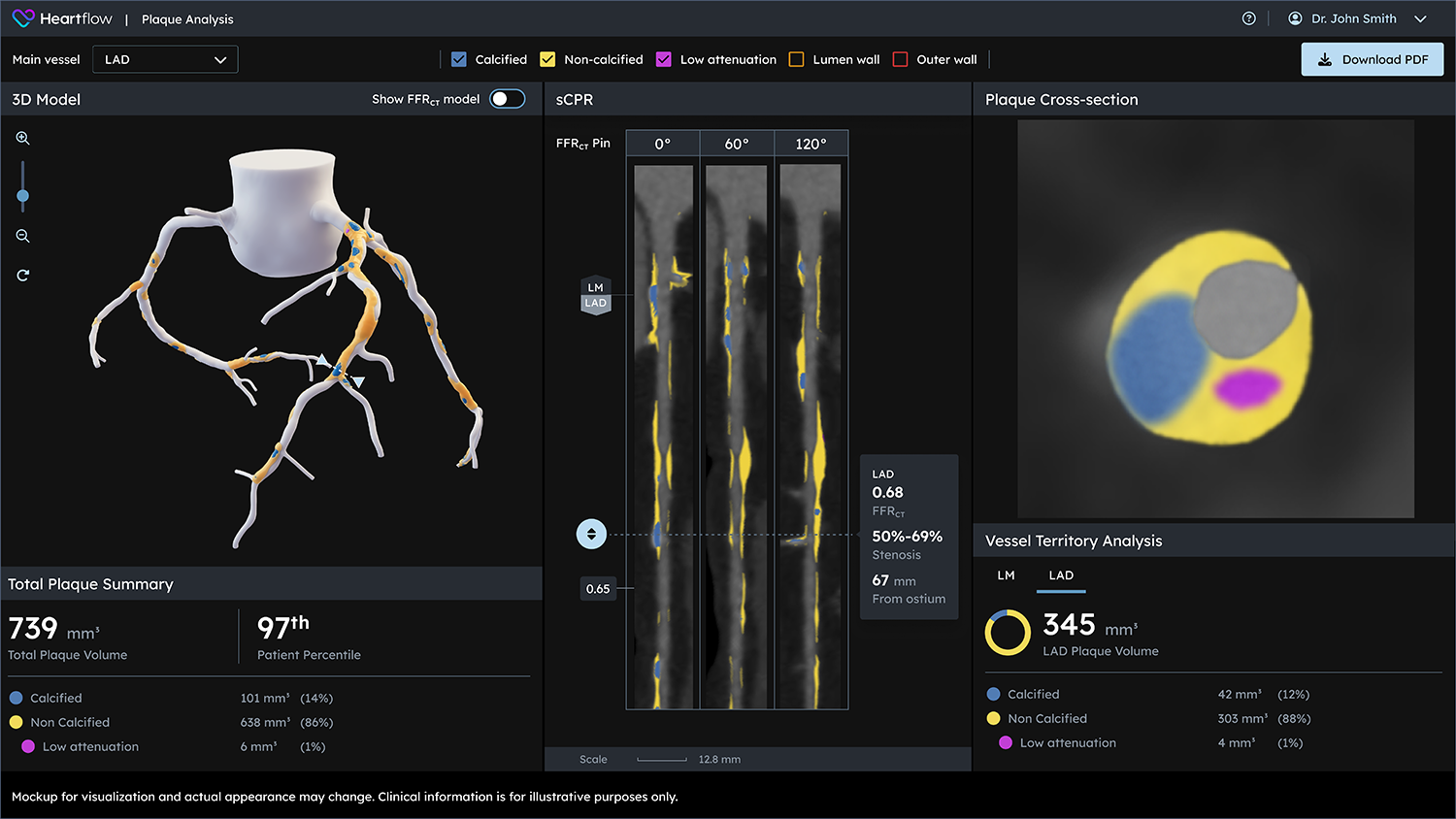
Heartflow Patient Plaque:
How it Works
Take the Next Step
1. Heart Disease Facts. CDC. Accessed December 18, 2024. https://www.cdc.gov/heartdisease/data-research/facts-stats/index.html
2. Heart Attack. CDC. Accessed December 18, 2024. https://www.cdc.gov/heart-disease/about/heart-attack.html
3. 2010 ACCF/AHA Guideline for Assessment of Cardiovascular Risk in Asymptomatic Adults Circulation. November 2010.
4. Preventing myocardial infarction in the young adult in the first place: how do the national cholesterol education panel iii guidelines perform? Journal of the American College of Cardiology. May 2003.
5. Williams MC, et al. Circulation. 2020. doi: 10.1161 CIRCULATIONAHA.119.044720
6. Rinehart S, et al. JSCAI. 2024. doi: 10.1016/j.jscai.2024.10129640345182 V2
7. Douglas PS, et al. The PRECISE Randomized Clinical Trial. JAMA Cardiol. 2023;8(10):904–914. doi:10.1001/jamacardio.2023.2595
8. Driessen, et al. J Am Coll Cardiol 2019; Norgaard, et al, Euro J Radiol 2015.
9. Narula J, et al. Eur Heart J. 2024. doi: 10.1093/ehjci/jeae115